


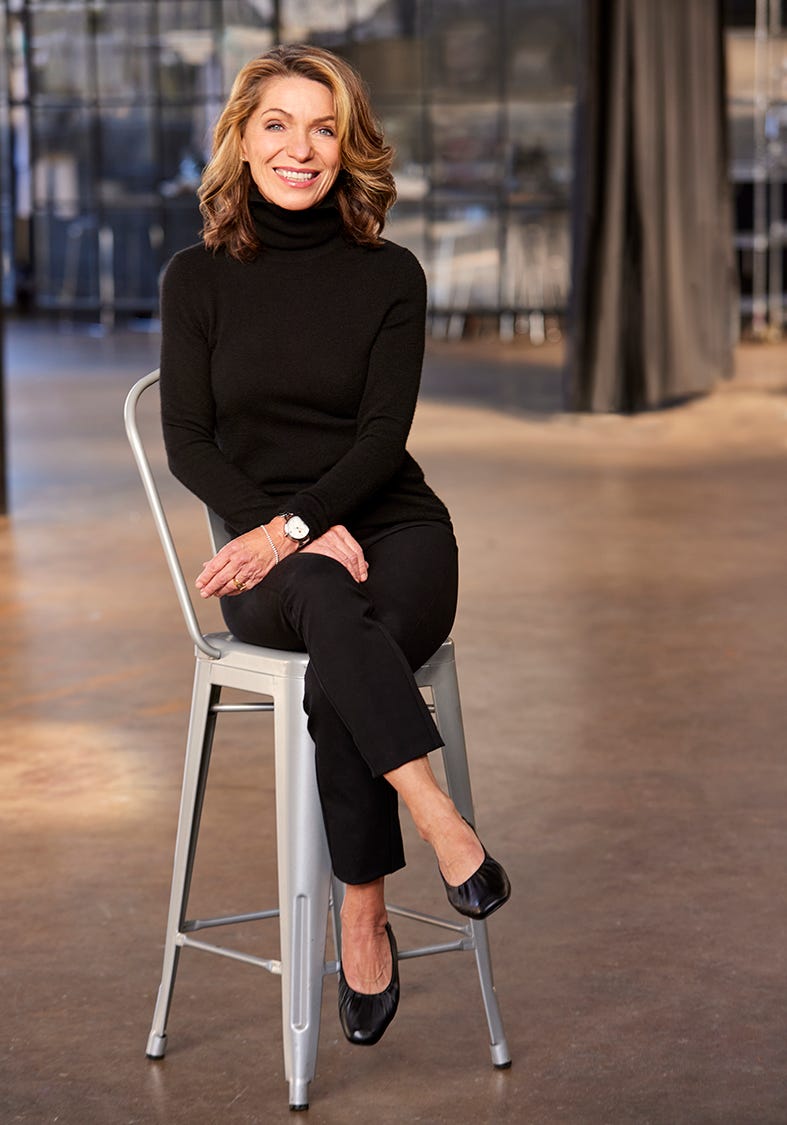
There are episodes of 50 Tastes Of Gray that feel like conversations, and then there are episodes that feel like someone quietly handing you back a part of yourself you didn’t realize you’d misplaced. My time with Shirley Billigmeier was the second kind.
We started with Minnesota, because of course we did. Minnesota is supposed to be calm, polite, a place where the loudest thing in the room is the zipper on your winter coat. But Shirley described a different mood: a simmering frustration, murderous intentions, a sense that something trustworthy had slipped out from under people’s feet. Not in a partisan way, but in a human way. A “what happened to the world I thought I lived in” way.
And that’s where the conversation cracked open.
When the world gets loud, relationships get fragile
Shirley and I talked about how politics has crept into the pre‑screening process of friendship. People aren’t just meeting each other anymore, they’re vetting each other. Not “Do we get along?” but “Are you safe to talk to?” Not “Who are you?” but “Which side are you on?”
It’s exhausting. And it’s lonely. And it’s happening everywhere.
But Shirley didn’t stay in the political arena. She never does. She uses it as a doorway into something more intimate: how we lose ourselves when the world gets too loud.
Food as the first language of identity
When Shirley talks about food, she’s not talking about calories or macros or the moral purity Olympics we’ve turned eating into. She’s talking about childhood. Safety. Joy. The table where you learned who you were before the world told you who to be.
She remembered her mother putting down food and simply letting the kids eat with no guilt, no commentary, no performance. Just hunger and satisfaction. Just instinct.
That’s the part that hit me. Because somewhere along the way, instinct got replaced by noise.
The moment she realized something was wrong
Shirley told a story about teaching junior high girls, girls already tangled in shame, already convinced their bodies were problems to be solved. She watched them obsess over food instead of living their lives. And she thought:
This isn’t living. This is captivity.
That moment sent her down the path that eventually became her life’s work: helping people reconnect with the signals their bodies have been whispering all along.
Choice as identity
One of the most powerful things she said in the episode was this:
“You need to make your own choices because choice is identity.”
That line has been rattling around in my head ever since.
Because she’s not just talking about food. She’s talking about everything.
What you eat. What you believe. Who you trust. How you move through a divided world without dividing yourself.
Shirley’s hunger scale, her invitation to tune back into your own body, is really a metaphor for something larger: reclaiming your inner authority in a culture that profits from your confusion.
What the episode left me thinking about
We’re living in a moment where the external world is louder than ever. Politics, social pressure, fear, identity, it’s all shouting for our attention. But Shirley’s reminder is simple and radical:
You can turn the volume down. You can listen inward. You can choose.
And in choosing, you come home to yourself.
That’s what this episode was really about. Not food. Not politics. Not Minnesota. It was about sovereignty, the quiet, steady kind that starts in your gut and works its way outward.
If you haven’t listened yet, this is one worth sitting with.
"You need to make your own choices because choice is identity.”
That, right there, is worth the price of admission.
Great profile, as always, Matthew.
“You need to make your own choices because choice is identity.”
A powerful statement! Every choice is a vote for who you will become 👏🏾👏🏾