


George Switzer’s father died in October. By November, a stranger was living in the house.
There was a lease dated thirty days before his father’s last breath. Rent: one dollar a month. The signature looked like it had been recorded during an earthquake. George had to call the cops on his own father’s house just to get it back.
That’s not the interesting part. The interesting part is how calmly he tells it.
I’ve interviewed authors, comedians, chefs, entrepreneurs, and people whose job descriptions require several paragraphs and a flow chart. Every so often, though, you meet someone who resets your definition of interesting. Not louder. Not more dramatic. Just steadier.
That was George.
He’s been running Queen Ann Ravioli in Bensonhurst since 1990, a Brooklyn institution that’s been making handmade Italian specialties since 1972. Before that, he spent five years as a housing cop in Spanish Harlem, to me a funny detail considering he also grew up running from cops on his own corner for being too loud after dark. That’s the range.
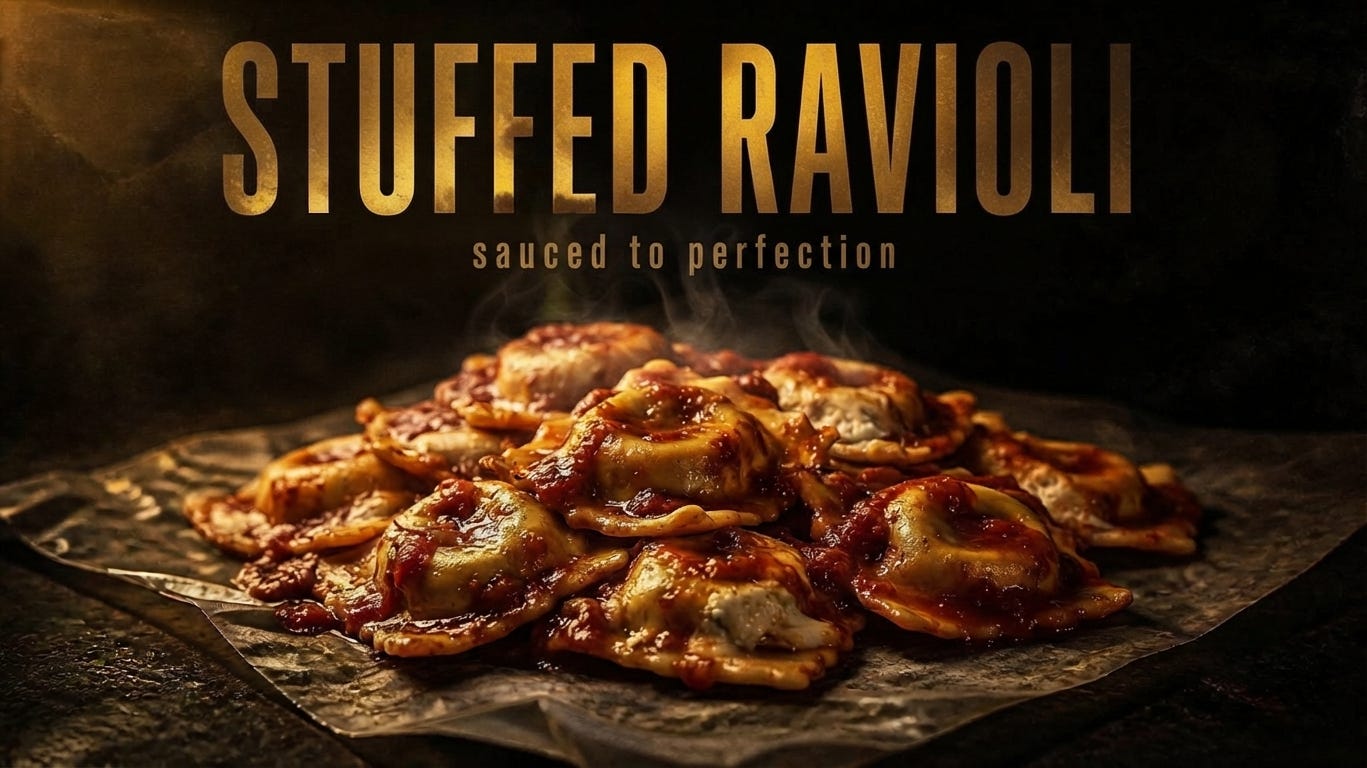
If you’ve never made ravioli from scratch, it’s easy to underestimate. On paper, it’s simple: dough, filling, seal, cook. However, In reality, it’s a bit of a messy tried and true method. The dough can’t be too dry or it cracks; too wet and it sticks. The filling, whether cheese or meat, has to hold its shape without losing flavor. Timing, temperature, pressure, repetition.
George talks about it the way some people talk about engines. Not romantically. Precisely. He talks cheese blends, seasonal fillings, and consistency across batches, the details most customers will never notice, but would absolutely miss if they were wrong. That’s the business. That’s also the philosophy.
But we didn’t spend most of our time talking about pasta. We talked about Brooklyn.
We talked about growing up in a place where everyone knew your parents, your grandparents, and exactly what you were doing wrong. About being a latchkey kid when that was normal. About corner pizza, and how the real argument isn’t toppings, it’s the crust, whether it has that perfect edge and that slight crackle when you fold it. George digs the corners, not the messy middles. We talked about refilling scotch bottles with iced tea as a teenager and hoping nobody noticed, and about traveling everywhere from Italy and the Azores to Portland and Lanai.
At one point I described the island of Lanai, which is mostly owned by Larry Ellison, as if it were both a kingdom and a small town.
“He owns the whole place,” George said, “and somehow it still feels fair.” He didn’t elaborate. He didn’t need to.
That’s the thing about George: he doesn’t perform stories. He just tells them. No swelling music, no motivational cadence, no attempt to turn every moment into a lesson. Just: this happened, then this happened, and here’s what mattered. Somewhere along the way, you realize that’s the whole skill… knowing which parts matter.
When he talks about his father’s death, he doesn’t linger on the grief. He talks about what came with it: the paperwork, the legal disputes, the property issues, the stranger in the house. Anyone who has dealt with an estate knows this part. Grief has a way of arriving with administrative responsibilities. It stretches things out and keeps wounds open.
What stood out wasn’t that it happened. It was how he moved through it. No bitterness, no performance. Just a clear understanding: bad things happen, and eventually you decide what happens next.
We often mistake resilience for toughness. Toughness is loud. It looks good on screen. Resilience is quieter. It’s showing up to work while your life is falling apart. It’s dealing with lawyers when you’d rather be remembering someone you lost. It’s handling problems that don’t resolve cleanly. Most resilient people don’t look heroic; they just keep going.
George is one of those people, and part of that comes from where he grew up. Bensonhurst isn’t just a place, it’s an ecosystem of family, culture, food, and expectation, all layered on top of each other. George grew up between German and Italian traditions where culture wasn’t something you studied. It was dinner. It was holidays. It was neighbors walking in without knocking. It was stories repeated often enough that they stopped feeling like stories and started feeling like memory.
Today, we talk about “community” like it’s something you build. He grew up inside it. There’s a difference.
Food, in that kind of environment, isn’t just food. It’s record-keeping. Recipes are archives. Techniques are inheritance. A ravioli isn’t just pasta; it’s a story with filling.
That’s why places like Queen Anne Ravioli last. Not because they scale, but because they don’t. Because someone is still paying attention to the dough, the texture, and the consistency, the things you only notice when they’re wrong.
At one point, George described his operation as “controlled chaos.” If you’ve ever worked in a professional kitchen, you know exactly what that means. From the outside, it looks like a disaster waiting to happen. From the inside, it’s timing, movement, and rhythm. Orders flying, people moving, everything somehow landing exactly where it’s supposed to.
Life works the same way. We call it experience because it sounds intentional, but most of the time, it’s just improvisation with better instincts.
Later, he talked about family members dealing with illness. What stood out wasn’t sympathy, but admiration. He spoke about them like people who had done something difficult well. That’s a different lens, and probably a more honest one, because most real courage doesn’t happen in dramatic moments. It happens in living rooms, hospital rooms, and kitchens, places where nobody is watching.
By the end of the conversation, nothing about George felt extraordinary, and that’s exactly why it stayed with me. The story isn’t that he avoided hardship; it’s that he didn’t let it take over. He handled what showed up. He kept working, kept building, kept showing up.
He kept making ravioli.
The world changes. Neighborhoods change, technology changes, and everything speeds up, scales up, and optimizes. But somewhere in Brooklyn, there’s still a place where people are making pasta the same way they did decades ago—by hand, by habit, by memory. Not because it’s efficient, but because it’s right.
George would probably laugh if you called him a philosopher. But if he has a philosophy, it sounds something like this:
Take care of your people. Do the work properly. Don’t get stuck in what goes wrong. Keep moving. And if things get messy, well, keep going anyway, preferably with something good to eat nearby.
George is such an ordinary guy doing extraordinary things every day. That's his superpower. That and a good batch of ravioli.
As always, you captured the deep essence of your subject like a maestro with a keyboard. Well done.